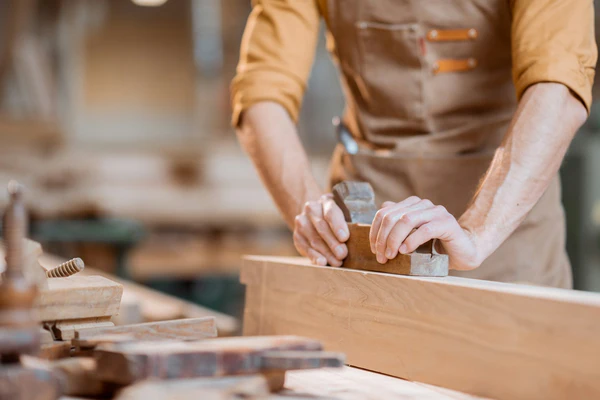
Import costs and currency swings have changed the maths on furniture in Lebanon. A repair that looked not worth the trouble five years ago is often now clearly the better decision — and sometimes the only sensible one. But not everything is worth saving. Here is an honest breakdown of what repairs well, what does not, and how to tell the difference before you spend anything.
What this guide covers
Why Repair Makes Sense in Lebanon Right Now
Most furniture sold in Lebanon is imported, and imported goods carry the full weight of shipping, customs and currency exposure. Meanwhile skilled carpentry labour is local. That gap is what has flipped the calculation.
There is also a quality argument. A solid-wood dining table or wardrobe bought fifteen years ago is frequently built better than a similarly priced new item today. Repairing it keeps a better object in your home.
The rough rule: if the repair costs less than half of a genuinely equivalent replacement, and the piece is structurally sound, repair. The rest of this guide is about judging “structurally sound” correctly.
Office Chairs: Usually Worth It
Office chairs are the most common repair request we get, and one of the most satisfying, because the failures are nearly always in replaceable parts rather than the chair itself.
Repairs that make sense
- Chair sinks under you — the gas lift cylinder has failed. It is a standard part, swapped in minutes, and it is the single most common office chair fault.
- Wobbling or dragging casters — wheels are standard sizes and simply pull out and push in.
- Broken armrest — often replaceable, and can be fabricated if the original is discontinued.
- Torn seat upholstery — reupholstering a seat pan is straightforward and far cheaper than the chair.
- Loose or seized tilt mechanism — usually bolts backing out, sometimes a replaceable plate.
When to let it go
If the seat base or backrest frame itself has cracked — especially the moulded plastic spine on cheaper chairs — you are rebuilding the chair around a broken skeleton. That is the point to replace.
Sofas and Recliners: Depends Entirely on the Frame
With upholstered furniture, everything comes down to one question: is the frame sound? Everything attached to the frame is renewable. The frame is not.
Very much worth repairing
- Sagging seats — usually collapsed webbing or springs underneath. Re-webbing restores the sofa completely and is not expensive.
- Flattened cushions — new foam cores transform how a sofa feels and sits.
- Worn or stained fabric — reupholstery on a good frame is genuinely economical here, and you choose the fabric.
- Recliner mechanism stuck — the steel mechanism is usually repairable or replaceable; cables and levers are the common failures.
- Wobbly legs or creaking joints — re-glue, re-dowel and brace.
Not worth it
Cracked or split frame rails, particularly on particleboard-framed sofas, mean the piece cannot hold fixings reliably any more. Also be realistic about heavy water damage and mould inside the foam — that is a health question, not a cost one.
Wardrobes, Kitchen Units and Built-Ins
Beirut humidity is hard on cabinetry, and coastal neighbourhoods are harder still. Most of what fails is hardware, and hardware is cheap.
- Doors not closing straight — hinge adjustment or replacement. Often a fifteen-minute fix.
- Drawers sticking or falling out — runners wear out and are a standard replacement part.
- Sagging shelves — add support, or replace with a thicker board. Common in wide melamine shelving.
- Swollen particleboard at the base — this is water damage. The swollen section cannot be restored, but a single damaged panel can usually be replaced without touching the rest of the unit.
Built-in wardrobes are almost always worth repairing rather than replacing, because replacement means new joinery cut to your specific opening — a far larger job than fixing what is there.
Dining Tables and Wooden Chairs
Solid wood is the most repairable material in your home. A dining chair that wobbles has loose joints, and loose joints are a solved problem: disassemble, clean the old glue, re-glue, clamp. Done properly it is stronger than it was.
- Wobbling chairs — re-glue and re-dowel the joints. Almost always worth it.
- Scratched or dulled table top — sanding and refinishing makes an old table look new. This is one of the highest-value repairs available.
- Water rings and heat marks — usually only in the finish, not the wood. Refinishing removes them.
- Split or cracked solid wood — repairable with glue and splines in most cases.
The exception is veneered particleboard that has swollen or delaminated. There is no substrate left to work with.
Flat-Pack and IKEA Furniture
Flat-pack furniture has a reputation for being disposable, but a large share of what goes wrong with it is assembly, not the furniture.
- Stripped cam locks and screw holes — repairable by plugging and re-drilling, which is more durable than the original fixing.
- Racking wardrobes — almost always a missing or badly fitted back panel. The thin backing board is what stops the whole unit twisting.
- Units never anchored to the wall — this is a safety issue, not just stability. Tall wardrobes and bookcases must be anchored, particularly in homes with children.
Worth knowing: most flat-pack failures we are called to trace back to the first assembly — over-tightened cams, a back panel fitted the wrong way round, or a unit never anchored. Getting it assembled properly the first time avoids nearly all of it.
How to Decide, In Practice
Before you call anyone, ask four questions:
- Is the frame or structure intact? If yes, repair is usually on the table. If the structure is broken, it usually is not.
- What would a genuinely equivalent replacement cost today? Not the cheapest thing available — the equivalent. This is where people undervalue what they already own.
- Is it solid wood or particleboard? Solid wood is nearly always worth repairing. Swollen particleboard rarely is.
- Does it matter to you beyond its price? Inherited and long-owned pieces have a value that does not appear in any comparison.
If you are unsure, photograph the damage and ask before booking anything. Any honest carpenter will tell you when a piece is not worth saving — and that answer is worth having for free.
See our furniture repair service or carpentry work for what we handle across Beirut.
Not sure if yours is worth repairing?
Send a few photos on WhatsApp and we will tell you honestly whether to repair or replace — before anyone comes out.