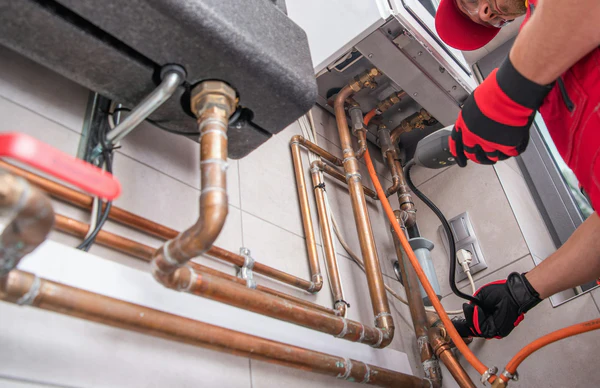
A pipe bursts behind your kitchen wall at 9pm. Water is spreading across the floor and the neighbour below has already started knocking. What you do in the next ten minutes decides whether this is a LBP 3,000,000 repair or a LBP 30,000,000 one. Here is the exact sequence — written for Beirut apartments specifically, where shared risers, rooftop tanks and generator-fed pumps change the rules.
What this guide covers
Step 1: Stop the Water (Not the Leak)
Do not try to patch the leak first. Cut the supply. In most Beirut apartments there are three shut-off points, and you should know all three before you need them:
- The fixture valve — a small tap directly under the sink, behind the toilet, or beside the water heater. Turn clockwise. This is fastest if the leak is at one fixture.
- The apartment main — usually in the kitchen service balcony, the bathroom ceiling hatch, or near the water heater. This kills water to the whole flat.
- The riser valve — in the building stairwell or on the roof next to the tanks. You will normally need the concierge (natour) for this one.
Beirut-specific: if your building runs on a rooftop tank fed by an electric pump, switching the pump off at the breaker stops the pressure feeding the leak even when a stuck valve will not close. Learn where that breaker is.
Step 2: Kill the Power to the Affected Area
Water and Lebanese apartment wiring are a genuinely dangerous combination, particularly in older buildings where junction boxes sit low in the wall and earthing is inconsistent.
If water is near sockets, running down a wall, or dripping through a ceiling into a light fitting, switch off the relevant circuit at the panel. If you cannot identify the circuit, switch off the main. Do this before you start mopping in standing water.
If your building alternates between EDL and a shared generator, remember that killing one source does not kill the other — the circuit can go live again the moment the building switches over. Turn off at your own panel, not just at the source.
Step 3: Contain the Damage and Protect What Matters
Once supply and power are off, you have bought yourself time. Use it in this order:
- Protect the neighbour below. Water travelling through a concrete slab is what turns your repair bill into a liability claim. Get towels and buckets under the source immediately.
- Lift what water destroys. Rugs, electronics, documents, the bottom drawer of the wardrobe. Parquet and laminate are the first casualties in most Beirut flats.
- Photograph everything. Wide shot, then close-ups, before you clean. If there is any insurance claim or landlord dispute later, this is the only evidence that will matter.
- Open windows. Beirut humidity means mould can start within 24–48 hours in a closed room.
Step 4: Call a Plumber the Right Way
Most people lose fifteen minutes here by describing the problem badly. A plumber decides what van, what parts and what priority based on your first message. Give them this, in one message:
- Your exact location — neighbourhood, street, building name, floor. Drop a pin.
- What is leaking — pipe in wall, under sink, water heater, toilet, ceiling from upstairs.
- Whether you managed to stop the water. This single fact changes whether you are a 20-minute emergency or a next-morning booking.
- Two photos — one wide, one close. Photos cut diagnosis time dramatically and let the plumber arrive with the right fittings.
Why WhatsApp beats a phone call: photos, a dropped pin and a written address survive a bad line and give the technician something to re-read on the way. In our experience it is consistently the fastest route to a correct first visit.
What Actually Causes Plumbing Emergencies in Beirut
The pattern in Beirut is fairly specific, and it is not the same as in cities with stable municipal water.
Aging galvanised pipe
Buildings from the 1960s–80s were plumbed in galvanised steel that corrodes from the inside. It fails without warning, usually at a joint inside a wall. If your building is that era and you have brown water on first draw, you are on borrowed time.
Pressure swings from pump cycling
Rooftop tank plus electric pump plus intermittent power equals repeated pressure surges. Each surge stresses joints. This is why leaks so often appear in the hour after power returns.
Water heater failure
Tank heaters have a finite life — typically 8–12 years in Lebanon, less with hard water. When the tank itself corrodes through, it does not drip; it empties.
Blocked drains backing up
Not a burst, but the same flooding outcome. Kitchen grease and bathroom hair build up over years in old cast-iron stacks until one wash cycle overwhelms it.
How to Avoid the Next Emergency
- Locate and label your shut-offs today. Tape a label on each valve. Take a photo and put it in a family WhatsApp group. This is a ten-minute job that will one day save you a floor.
- Exercise the valves twice a year. Valves that never move seize shut. Open and close each one fully every six months.
- Replace flexible hoses every 5 years. The braided hoses under sinks and behind washing machines are the single most common burst point, and they cost very little to replace preventively.
- Fit a drip tray under the water heater with a drain to the balcony. It converts a catastrophic failure into a nuisance.
- Treat slow drains early. A drain that is slow this month is a backup next winter.
The Bottom Line
Water, power, contain, call — in that order. Almost all of the avoidable cost in a plumbing emergency happens in the first ten minutes, while people are looking for a bucket instead of a valve.
Spend ten minutes this week finding your shut-offs. It is the highest-return maintenance task in any Beirut apartment, and it costs nothing.
If you need it handled now, our plumbing team covers Beirut and Greater Beirut with priority slots held daily for emergencies.
Plumbing emergency right now?
Send us your location and a photo on WhatsApp. Emergencies get priority dispatch across Beirut and Greater Beirut.